Arlon PCB Manufacturing
High-temperature polyimide, rigid-flex bonding and specialty laminate PCB projects engineered around the exact material grade, stackup and reliability requirements in your drawing.
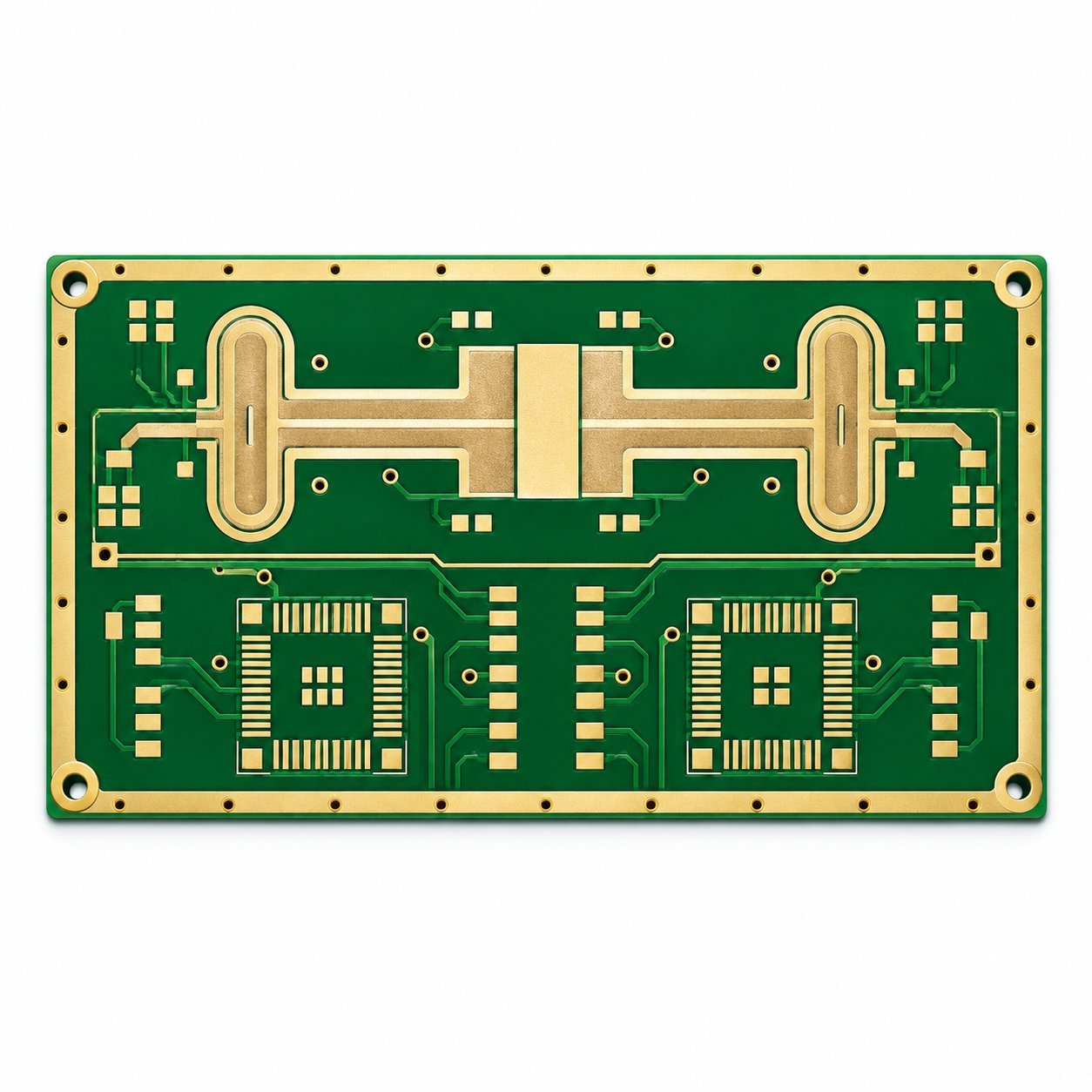
The Material Callout Is Part of the Electrical and Reliability Design.
An Arlon PCB is a printed circuit board specified around an Arlon specialty laminate or prepreg system. Current Arlon Electronic Materials products focus strongly on high-temperature polyimide, non-woven aramid reinforced systems and controlled-flow bonding materials used in demanding multilayer, rigid-flex and thermally stressed electronics.
The name “Arlon PCB” is also still used in the industry for several legacy Arlon RF/microwave material families. Those high-frequency families are now marketed within Rogers Corporation’s circuit-material portfolio. For that reason, the exact manufacturer and material grade should be stated in the fabrication data rather than relying on the word “Arlon” alone.
Choose the Resin System Around the Failure Mode You Need to Control.
Representative current Arlon EMD families. Exact availability, thickness, glass style and prepreg construction are confirmed per project.
85N
Pure high-temperature polyimide intended for long thermal life, high-layer multilayers and severe end-use environments.
85HP
Micro-fine filled polyimide developed to reduce Z-axis expansion and improve thermal conduction in high-density, thick-copper and high-layer builds.
85NT
Pure polyimide on non-woven aramid reinforcement for low in-plane expansion, dimensional stability and reduced board weight.
55NT
High-temperature multifunctional epoxy with non-woven aramid reinforcement, combining lead-free compatibility with low in-plane expansion.
37N / 38N
Polyimide low-flow prepreg families for rigid-flex bonding, heat-sink attachment and other constructions where resin movement must be tightly controlled.
84HP
Ceramic-filled polyimide prepreg designed for filling heavy-copper etched areas and clearance regions in metal-core or complex polyimide constructions.
When the Drawing Calls Out AD, CLTE, CuClad, DiClad or IsoClad.
Several well-known RF/microwave laminates historically associated with Arlon are now sold within Rogers Corporation’s Advanced Electronics Solutions portfolio. These materials remain relevant to antenna, communications, radar, amplifier and other high-frequency PCB designs.
Current product identity: Rogers AD Series and Rogers CLTE Series. Rogers’ product navigation also lists CuClad, DiClad and IsoClad. Confirm the exact current grade in the manufacturer documentation.
For RF projects, we confirm the exact current part number, Dk/Df basis, dielectric thickness, copper type and impedance requirement before quotation. “Arlon equivalent” is not treated as a sufficient material definition for a controlled RF stackup.
Send Your Material Callout →Commercial PTFE-based antenna laminates covering a broad dielectric-constant range, including AD250C, AD255C, AD300D and AD350A.Common fit: antennas, communications, telematics, power amplifiers.
Ceramic/PTFE woven-glass systems emphasizing dimensional and phase stability with low CTE.Common fit: radar, avionics, EW, phase-sensitive RF designs.
Woven fiberglass/PTFE laminates with low loss and a range of Dk values, balancing electrical and mechanical behavior.Common fit: antennas, wideband circuits, filters and low-noise designs.
Fiberglass-reinforced PTFE laminates with low Dk and low dissipation factor options for high-frequency circuitry.Common fit: antennas, communications and power amplifiers.
Non-woven fiberglass/PTFE laminates with very low Dk/Df and conformability advantages in selected antenna constructions.Common fit: conformal or wrap-around antennas and communications systems.
Representative Arlon Material Comparison.
For related construction choices, review Rogers PCB materials, high-frequency PCB manufacturing, rigid-flex PCB construction.
Use this as a project-screening guide, not as a substitute for the current manufacturer data sheet.
| Material | System | Nominal Tg | Design Driver | Typical Project Context |
|---|---|---|---|---|
| 85N | Pure polyimide | 250°C | Long-term thermal stability | High-layer-count, aerospace, space, down-hole and high-temperature electronics |
| 85HP | Filled polyimide | 250°C | Lower Z-axis expansion and higher thermal conductivity than conventional polyimide systems | High-density vias, thick copper, sequential lamination and thermally demanding multilayers |
| 85NT | Polyimide + non-woven aramid | 250°C | Low in-plane CTE and dimensional stability | CTE-controlled assemblies, lighter-weight high-reliability boards |
| 55NT | Multifunctional epoxy + non-woven aramid | 170°C | Low X-Y expansion with lead-free compatible epoxy | Laser-drilled and dimensionally sensitive multilayers |
| 37N / 38N | Low-flow polyimide prepreg | 200°C | Minimal, controlled resin flow | Rigid-flex bonding and heat-sink attachment |
| 84HP | Ceramic-filled polyimide prepreg | 250°C resin family | Fill capability and shrink/crack control | Heavy copper, metal-core clearance fill and complex high-temperature stackups |
Property values are representative manufacturer-published values and can vary by construction, test method and revision. Final material selection should be checked against the current data sheet and fabrication drawing.
Manufacturer references: 85N data, 85HP data, 85NT data, 55NT data, 37N data, 38N data, 84HP data. Tg is a material property, not a finished-board operating-temperature rating. Material procurement and construction remain subject to project confirmation.
Arlon Builds Need Material-Specific Process Planning.
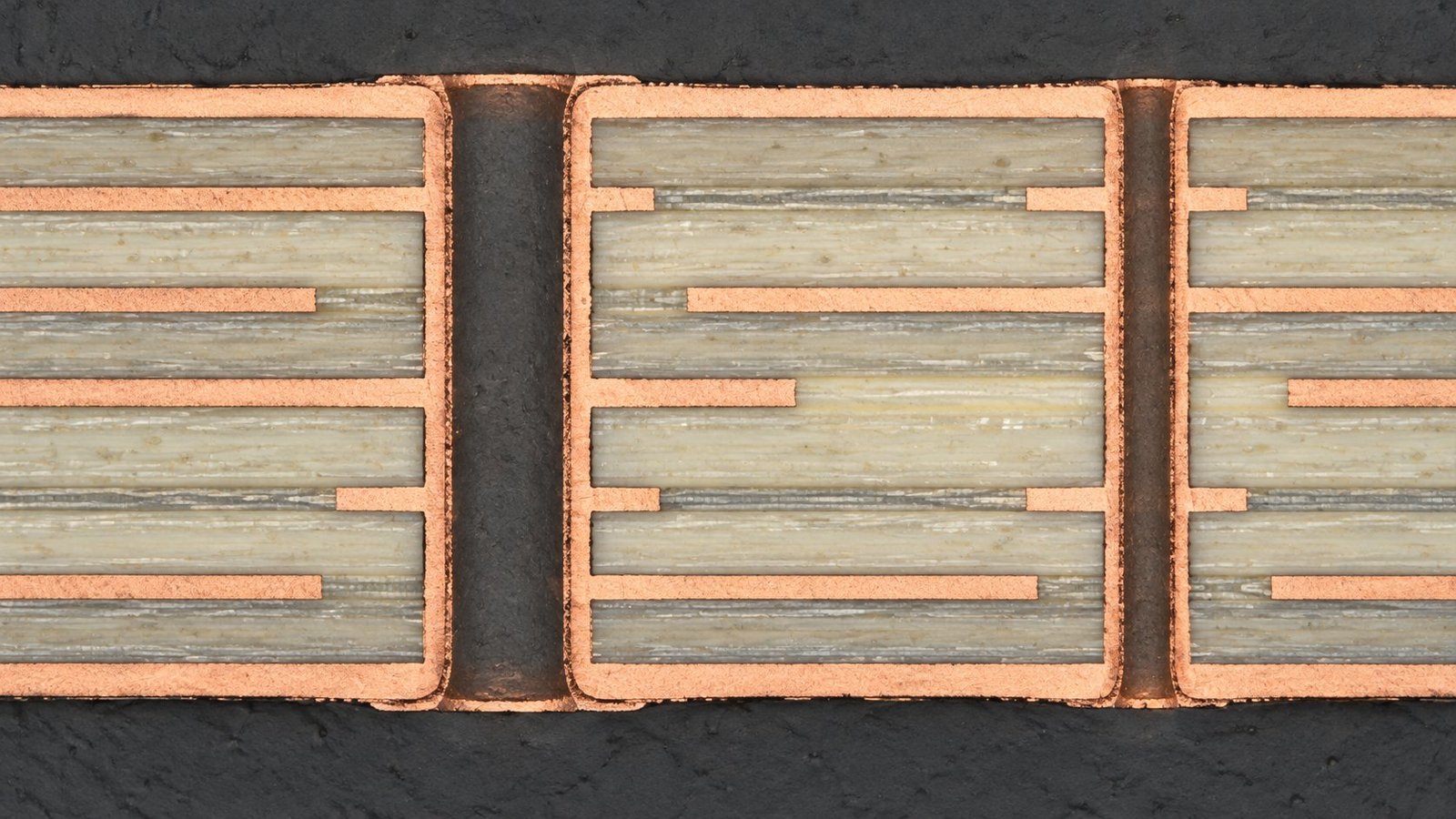
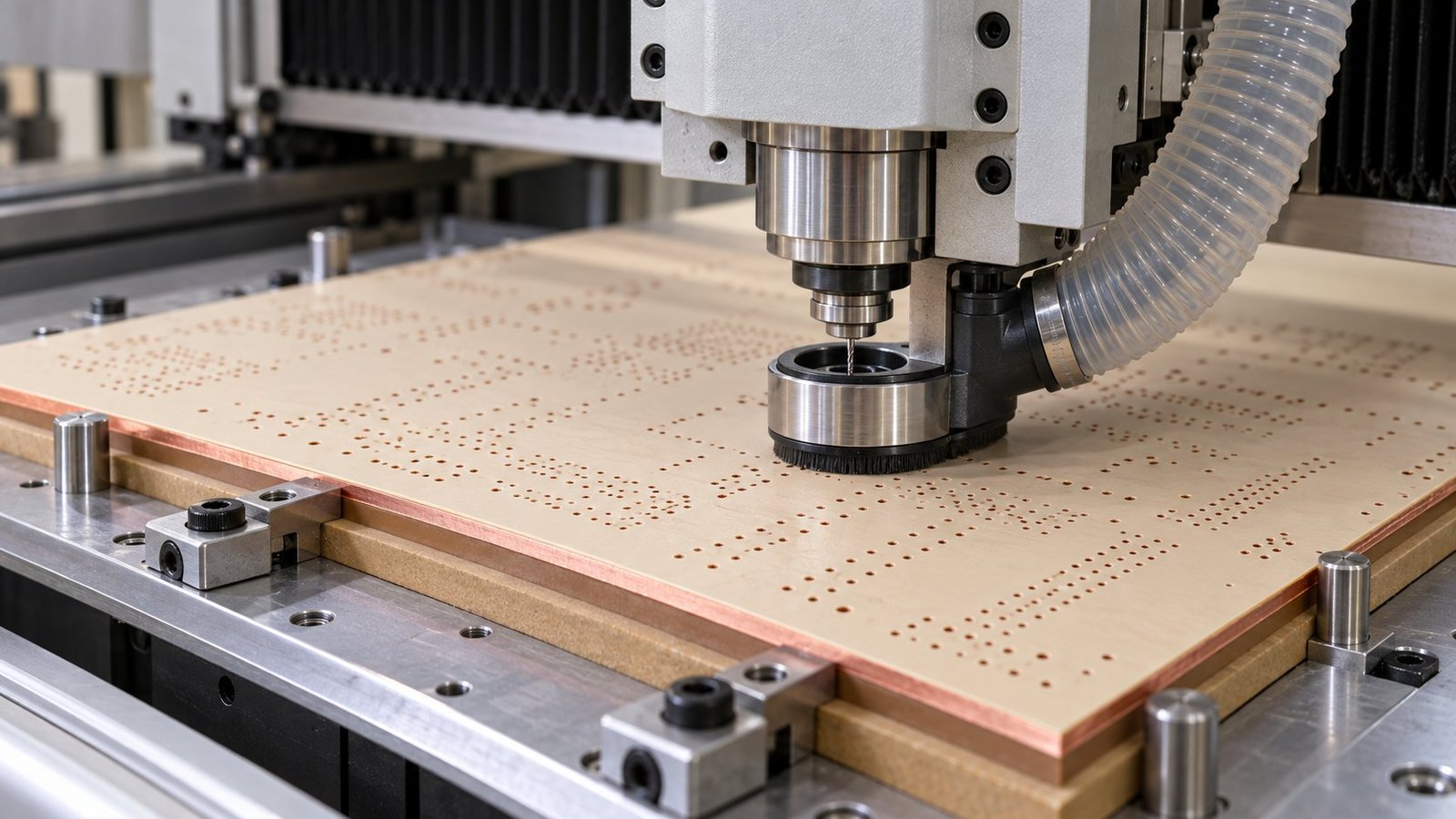
Polyimide, aramid-reinforced systems and PTFE RF laminates do not share one universal fabrication recipe. We review the laminate family and construction before setting the lamination, drilling, hole preparation and thermal process route.
Exact Grade & Revision
Confirm manufacturer, product family, laminate/prepreg grade, dielectric thickness and any approved alternates before material purchasing.
Cure Profile & Resin Flow
Use the applicable material processing guide and stackup-specific resin requirements rather than applying an FR-4 cycle by default.
Drill & Desmear Route
Match drilling and hole-wall preparation to polyimide, aramid or PTFE behavior, especially on dense PTH and via structures.
Assembly Exposure
Evaluate lead-free reflow, repeated thermal cycles and end-use temperature together with the selected resin system.
Sequential Lamination
Review repeated lamination cycles, via architecture and resin compatibility for high-layer or HDI constructions.
Coupon & Microsection Plan
Define controlled impedance, electrical test, microsection or other project-specific inspection before production starts.
Where Arlon Materials Are Commonly Selected.
The right material depends on the dominant thermal, mechanical and electrical constraints of the assembly.
High-Reliability Avionics
High-temperature polyimide systems for multilayers exposed to demanding thermal cycling and reliability requirements.
Mission-Critical Electronics
Materials selected for thermal stability, multilayer reliability and long-life applications where field repair is not possible.
Down-Hole Electronics
High-Tg polyimide systems used where sustained elevated temperatures make conventional FR-4 unsuitable.
Controlled-Flow Bonding
Low-flow prepregs help limit resin squeeze-out around flex transitions, openings and heat-sink attachment zones.
Thermally Demanding Stackups
Filled polyimide and specialty prepreg options support heavy copper and constructions that challenge standard resin fill.
Legacy Arlon RF Families
AD, CLTE, CuClad, DiClad and IsoClad material families remain relevant to antennas, radar, communications and amplifier circuits.
Material Identification and Build Documentation
Review material identification, stackup details and the inspection records required for your project.
From Material Callout to Finished Arlon PCB.
Technical decisions are resolved before material purchasing and production release.
Send Fabrication Data
Provide Gerber or ODB++, fabrication drawing, stackup, exact material callout, quantity and target delivery.
Material & DFM Review
Confirm current material availability, construction, controlled features and any points requiring engineering clarification.
Approve Stackup
Lock the material identity, dielectric thickness, copper, impedance and process-sensitive requirements before release.
Build, Inspect & Ship
Fabricate using the approved route and complete the electrical, dimensional and project-defined verification scope.
Send the Exact Arlon Material Callout.
The fastest way to evaluate an Arlon PCB is to include the material grade and stackup together with the board data.
Gerber or ODB++, drill files, fabrication drawing and panel requirements.
Manufacturer, grade, laminate/prepreg construction, thickness and approved alternates if any.
Impedance, IPC class, copper weight, via structure, thermal exposure and inspection/test requirements.
What to Include for a Useful First Review
Specialty-laminate quotations are more accurate when the stackup and material constraints are explicit from the start.
- Exact Arlon or Rogers material part number
- Layer count and finished board thickness
- Core/prepreg dielectric thickness targets
- Copper weight and heavy-copper areas
- Controlled impedance values and tolerances
- Rigid-flex, heat-sink or metal-core bonding details
- Required IPC class and test documentation
Common Material and Fabrication Questions.
Is Arlon still a current PCB laminate brand?
Yes. Arlon Electronic Materials currently supplies specialty laminate and prepreg systems, especially polyimide, epoxy, aramid-reinforced and low-flow products. Some historic Arlon high-frequency circuit-material families are now marketed by Rogers Corporation, so the exact material part number should be confirmed.
Which Arlon material is suitable for high-temperature PCB applications?
85N, 85HP and 85NT are 250°C Tg polyimide families intended for demanding thermal and reliability requirements. The final choice depends on Z-axis expansion, reinforcement, thermal conductivity, board construction and qualification requirements.
What is the difference between 85N and 85HP?
85N is a pure high-temperature polyimide system. 85HP uses micro-fine filler to reduce Z-axis expansion and increase thermal conductivity relative to conventional polyimide systems, making it attractive for dense vias, thick copper and high-layer-count constructions.
Can Arlon materials be used for rigid-flex PCBs?
Yes. Arlon offers low-flow polyimide prepregs such as 37N and 38N for rigid-flex bonding and other applications where controlled resin flow is important. The complete rigid-flex material set and lamination construction must be reviewed together.
Are AD, CLTE, CuClad, DiClad and IsoClad still Arlon materials?
They are historically associated with Arlon’s high-frequency circuit-material business, but these product families are currently marketed within Rogers Corporation’s Advanced Electronics Solutions portfolio. Use the current manufacturer designation and exact grade in procurement and fabrication documentation.
What files are needed for an Arlon PCB quotation?
Provide the fabrication data, drill files, drawing, stackup, exact material grade, board thickness, copper requirements, quantity, surface finish and any controlled impedance, IPC class or test requirements.
Arlon®, Rogers®, AD Series®, CLTE®, CuClad®, DiClad® and IsoClad® are trademarks of their respective owners. GlobalWellPCB is an independent PCB/PCBA supplier and is not presented as an affiliate of Arlon Electronic Materials, Elite Material Co. or Rogers Corporation. Product properties and availability should be verified against the current manufacturer documentation before design release.