Request PCB / PCBA review
Send the controlled PCB or assembly package, critical-feature list, test specification and record requirements.
View capabilitySpecify what must be verified, how it will be checked and which records must accompany the order. Bare-board verification, assembly inspection and powered functional testing address different requirements and need separate acceptance instructions.
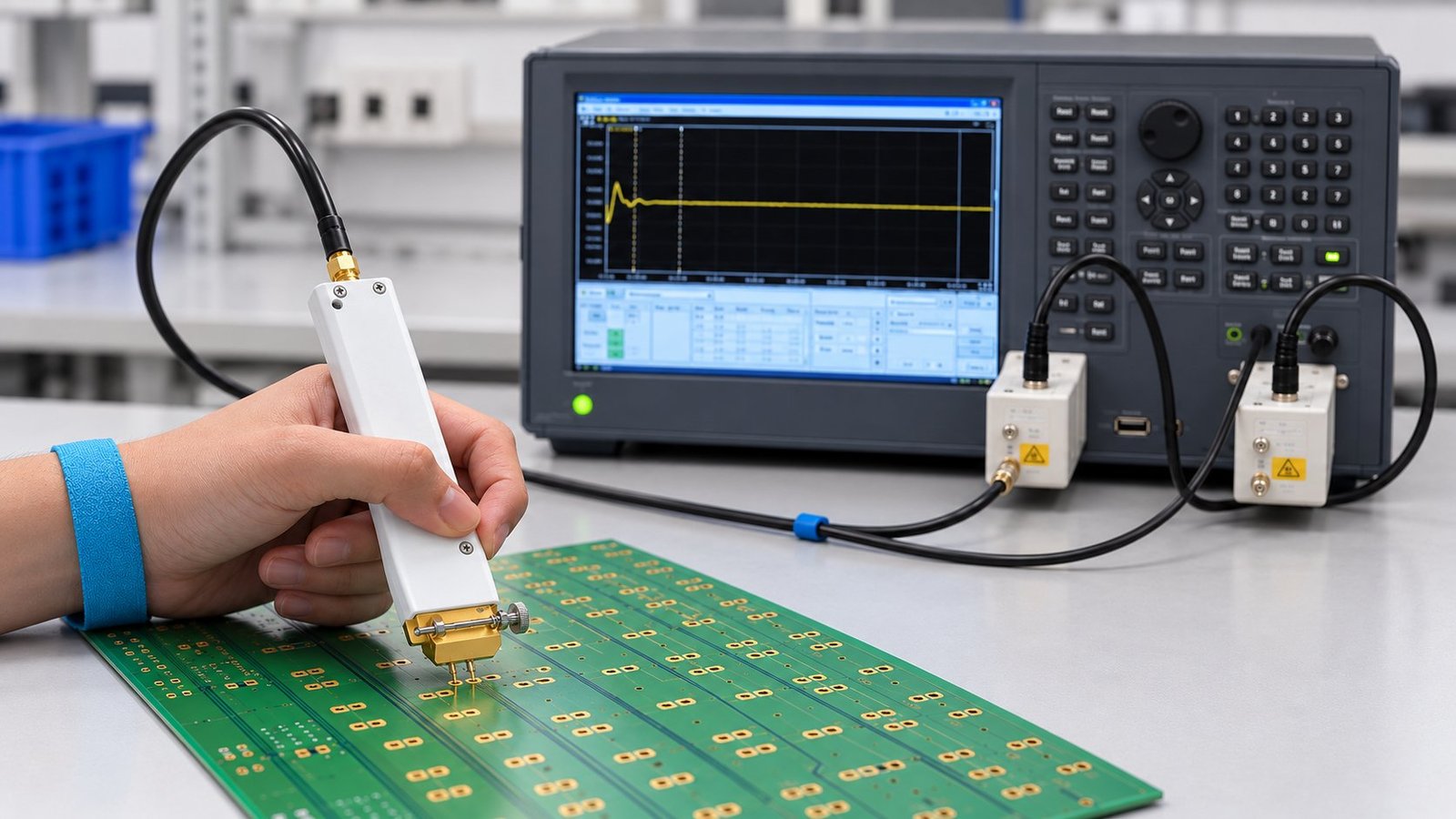
Read each value together with its board type and review conditions.
Published limits apply to their stated board type. Layer count, copper weight and minimum geometry require a combined engineering review.
The method and deliverables are agreed for the order; a method name does not define complete test coverage.
On smaller screens, scroll within the table to see every column.
| Parameter | Published capability | Applies to | Review conditions |
|---|---|---|---|
| Bare-board electrical verification | Define continuity/isolation requirements | Unassembled PCB | Data revision, netlist basis, acceptance and requested report |
| Board dimensions and features | Drawing-based inspection plan | Outline, holes and critical dimensions | Datums, tolerance, measurement locations and records |
| Impedance verification | Target and coupon plan agreed | Controlled-impedance PCB | Layer/net table, tolerance, coupon construction and report |
| Assembly AOI | 100% AOI testing entry | Assembly inspection list | Agree the applicable features, stages, exceptions and records |
| X-ray analysis | Listed | Hidden-joint or selected assembly review | Package, viewing plan, coverage and acceptance criteria |
| Microscope inspection | Up to 20X | Assembly inspection list | Features, magnification needed and record requirements |
| ICT / FCT | Project-specific confirmation | Assembled-board electrical/functional test | Fixture, access, firmware, test sequence and pass criteria |
Use one revision for data, drawing and test instructions.
Optical and hidden-joint checks should follow the populated design.
Identify polarity-sensitive parts, fine-pitch packages, connectors and features with restricted optical access. Agree how inspection results and any disposition will be recorded.
AOI coverage should be stated against the assembly stage and accessible features. Where X-ray or microscopy is requested, identify the relevant components and acceptance criteria so the quoted scope is measurable.
A powered test requires more than a request to test the board.
The requested evidence should correspond to the requirements that drive acceptance.
List the records required with the shipment: for example the agreed electrical test result, impedance report, dimensional record, selected inspection images or functional test log. Their format and scope belong in the quotation and order requirements.
If the design revision or test requirement changes, update the acceptance plan with it. Manufacturing and inspection must refer to the same released files.
Attach the product files and describe the required acceptance evidence.
Send the controlled PCB or assembly package, critical-feature list, test specification and record requirements.
View capabilityCheck component, board and inspection needs together before placing the assembly order.
View capabilityInclude the drawing revision and acceptance requirements. The engineering review confirms the manufacturable combination before quotation.
AOI addresses the agreed optical inspection features. Functional acceptance needs a separate test specification, interfaces and pass criteria.
The package selection, viewing plan, coverage and acceptance criteria are agreed for the project. Specify them in the assembly RFQ.
Provide target and tolerance, layer/net group, relevant stackup, agreed coupon/test method and the report requirements.
Include them in the initial RFQ and order requirements so the measurement plan and record format can be agreed before release.