High Tg PCB Manufacturing
High-Tg FR-4 selected for the complete thermal requirement.
Discuss high Tg PCB manufacturing with GlobalWellPCB. Match the high-Tg FR-4 grade, stackup and assembly profile to your operating environment, then define fabrication, inspection and validation requirements.
- High-Tg FR-4
- Material & stackup review
- Project-specific quotation
Tg is a material transition temperature—not the maximum continuous operating temperature of a finished PCB.
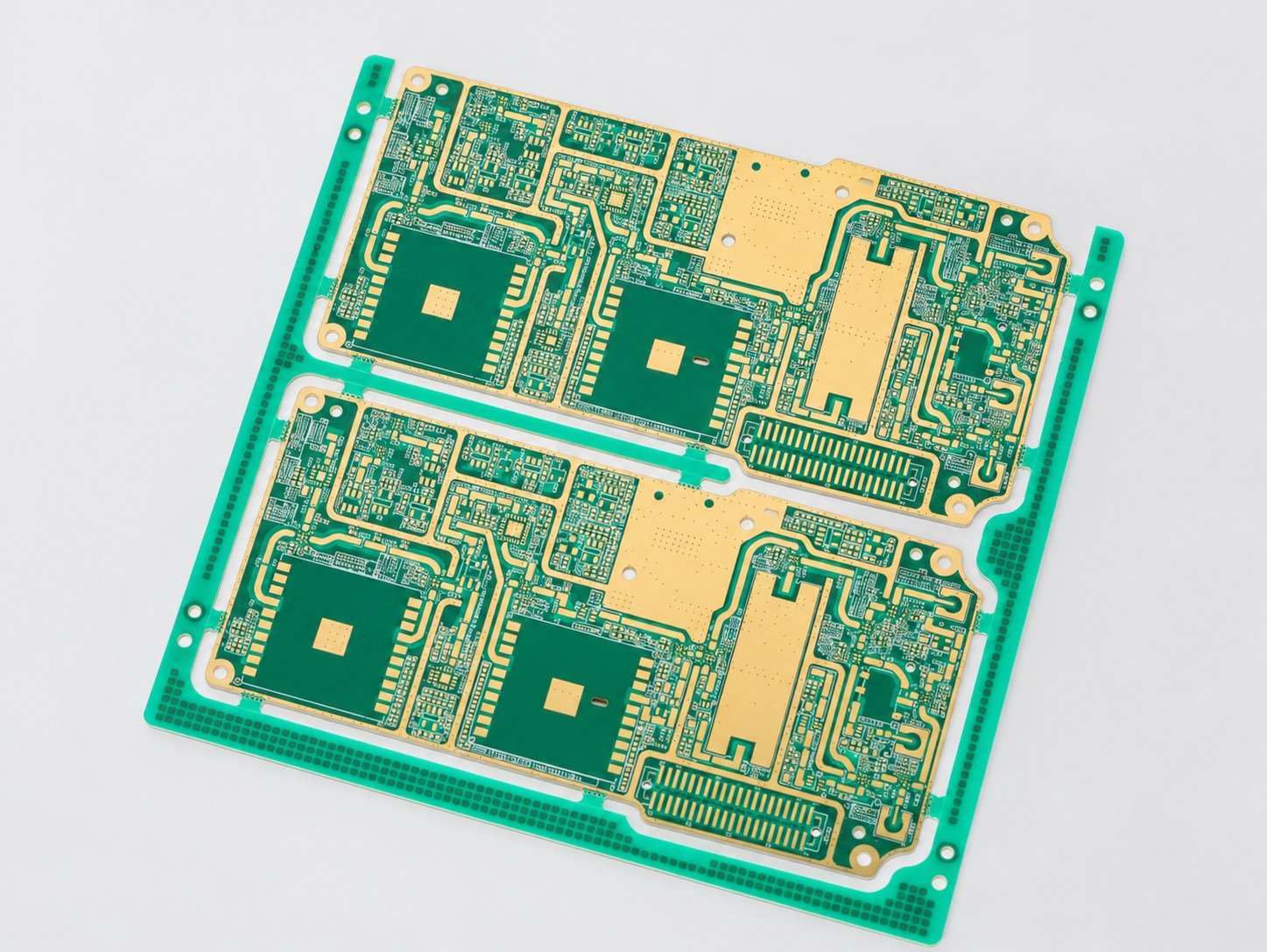
What is a high Tg PCB?
A high Tg PCB is a printed circuit board made with a laminate whose resin system has a relatively high glass transition temperature. In common FR-4 purchasing terminology, high Tg often means a nominal Tg of approximately 170°C or higher.
Tg describes a transition in resin behavior: as the material passes through its glass transition region, stiffness decreases and thermal expansion behavior changes. Tg does not describe melting, and it is not a complete measure of thermal reliability.
The practical selection rule
Specify the laminate grade and Tg test method, then review decomposition temperature, Z-axis expansion, assembly exposure and long-term operating requirements. A higher Tg number alone does not qualify the board.
- Common high-Tg convention
- ≥170°C A common commercial description, not a universal acceptance rule.
- Material family
- Often FR-4 High Tg can be a property of an FR-4 laminate; it is not necessarily a different material family.
- Comparison requirement
- Grade + method Compare values measured using compatible methods and conditions.
- Reliability decision
- Whole-board review Consider the laminate, copper, vias, stackup, moisture and thermal exposure together.
Which material properties matter for high Tg PCBs?
Tg is one part of the material specification. The following properties answer different questions and should not be treated as interchangeable temperature ratings.
| Property | What it describes | What to check |
|---|---|---|
| Tg — glass transition temperature | The transition region associated with changes in resin stiffness and expansion behavior. | Specify the test method, such as DSC, TMA or DMA, and whether the requirement is a typical value or an acceptance minimum. |
| Td — decomposition temperature | Thermal degradation measured under defined conditions, commonly by TGA at a specified mass loss. | Confirm the mass-loss criterion and test method. Td is not an allowable board operating temperature. |
| Z-axis CTE and total expansion | Expansion through the board thickness, including behavior below and above Tg. | Review pre-Tg and post-Tg values, total expansion, board thickness and plated-hole construction. |
| T260 / T288 | Time to delamination under specified laboratory exposure at 260°C or 288°C. | Check the exact method and specimen conditions. These results do not authorize continuous use at those temperatures. |
| Long-term thermal rating / RTI | Long-term retention of specified material properties under a defined evaluation framework. | Review applicable material recognition and end-product requirements. Do not substitute Tg for a long-term thermal rating. |
| Thermal conductivity | The material's ability to conduct heat. | Evaluate the complete heat path, including copper, thermal vias, interfaces and cooling. Higher Tg does not automatically mean better heat conduction. |
| Dk / Df | Dielectric constant and dissipation factor, relevant to impedance and signal loss. | Compare frequency, test method and construction. A high-Tg material is not automatically a low-loss RF or high-speed material. |
On smaller screens, scroll this table horizontally to compare all columns.
What can a higher Tg actually improve?
- A later resin transition: a higher Tg shifts the transition to reduced resin stiffness to a higher temperature.
- A better-defined material choice: reviewing Tg alongside CTE and Td helps identify grades worth evaluating for demanding thermal exposure.
- A stronger validation basis: a named material and controlled stackup make prototype results more useful when preparing a production build.
Important: higher Tg does not automatically mean lower CTE, lower moisture absorption, longer service life or better thermal conductivity.
High Tg FR4 vs. Standard FR-4
FR-4 is a family of flame-retardant glass-reinforced epoxy laminates, not a single Tg value. The categories below are common purchasing shorthand rather than a universal classification standard.
| Common description | Illustrative nominal Tg | How to use the category | What it does not establish |
|---|---|---|---|
| Standard Tg FR-4 | Approximately 130–140°C | A starting point for evaluating conventional FR-4 against the actual assembly and service environment. | It does not establish a fixed maximum operating temperature or automatically exclude lead-free assembly. |
| Medium Tg FR-4 | Often approximately 150–160°C | An intermediate category to compare where material properties and project requirements justify it. | It does not guarantee a particular CTE, thermal endurance or qualification level. |
| High Tg FR-4 | Commonly 170°C and above | A candidate category when the design requires a higher glass transition temperature, subject to full material and process review. | It does not make all Tg 170 or Tg 180 laminates interchangeable, or automatically suitable for high-frequency designs. |
On smaller screens, scroll this table horizontally to compare all columns.
Is Tg 170 better than Tg 150?
Tg 170 indicates a higher nominal glass transition temperature when compared on a compatible test basis. Whether it is the better PCB material depends on Td, expansion, moisture behavior, electrical performance, construction and the conditions the finished board must survive.
How to choose a high Tg PCB material
Start with the thermal mission profile and the actual construction. Then select and document the laminate, rather than choosing a Tg number in isolation.
-
Define operating and assembly exposure
Record expected local board temperatures, hot spots, dwell time, thermal cycling and humidity. Separately identify reflow peaks, time at temperature and the expected number of assembly or rework cycles.
-
Review the construction that sees the stress
Include layer count, finished thickness, copper distribution, plated through-holes and any sequential lamination requirements. Thermal reliability depends on the board construction as well as the resin system.
-
Compare named grades on a consistent basis
Review Tg and its method, Td, Z-axis expansion, delamination data and moisture behavior. For high-speed or RF designs, also assess Dk, Df and the relevant frequency-dependent data.
-
Document substitutions and acceptance
Specify the approved material, permitted alternatives, stackup and required evidence. An alternative with the same nominal Tg should still require a documented equivalence review.
High Tg PCB manufacturing requirements to confirm
A useful quotation starts with more than “FR-4, Tg 170.” Include the construction details and acceptance requirements that determine material selection, manufacturability and scope.
A high Tg PCB manufacturer should review the named material and process combination; “Tg 170” alone is not a complete purchase specification.
| Requirement | Include in your enquiry | What needs agreement |
|---|---|---|
| Laminate and Tg | Preferred grade, Tg requirement, measurement method and any applicable material specification. | Named material, current availability and written approval rules for alternatives. |
| Layer stackup and board thickness | Layer count, stackup drawing, finished thickness, dielectric thicknesses and tolerances. | Core and prepreg construction, resin content, copper balance and achievable tolerances. |
| Copper requirements | Inner-layer copper, outer-layer copper and finished copper requirements where applicable. | Distinguish base foil from finished copper; review plating, etching and lamination implications. |
| Trace geometry and impedance | Critical line and space dimensions, impedance targets, tolerances and relevant reference layers. | Stackup-dependent geometry, material electrical data and any required impedance coupons. |
| Holes and via structures | Drill data, finished-hole dimensions, plated and non-plated holes, and any blind, buried or filled vias. | Feature feasibility, aspect ratio, plating requirements and the necessary fabrication sequence. |
| Surface finish and solder mask | Required surface finish, solder mask requirements and any storage or assembly constraints. | Finish availability, assembly compatibility, inspection criteria and special process needs. |
| Assembly and thermal exposure | Reflow profile, expected process cycles, rework exposure and operating-temperature profile. | Material suitability, handling requirements and whether qualification testing is necessary. |
| Inspection and documentation | Applicable IPC documents, class and revision, electrical test requirements and requested reports. | The agreed inspection scope, sampling, traceability, report deliverables and acceptance criteria. |
On smaller screens, scroll this table horizontally to compare all columns.
Keep the documents consistent: the fabrication drawing, stackup, purchase order and approved material list should not specify conflicting grades, Tg methods or acceptance conditions.
Where should high Tg PCBs be considered?
High-Tg laminates are candidates for designs with demanding thermal or assembly conditions. The application category starts the discussion; it does not determine the material without a design review.
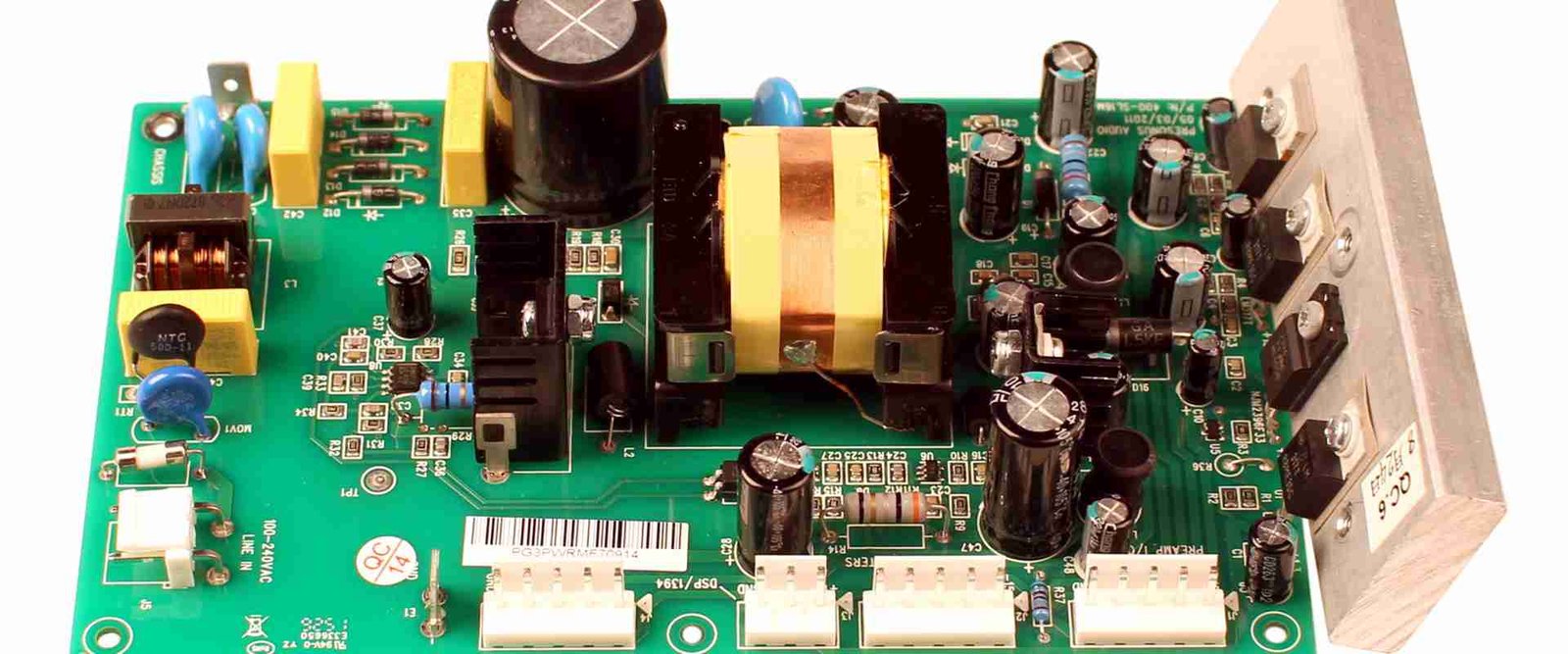
Power conversion
Power supplies, converters and motor-drive controls may require close review of hot spots, copper distribution, via construction and thermal cycling.
Industrial electronics
Enclosed controls and equipment operating for long periods call for a documented temperature profile, humidity assessment and reliability target.
Automotive electronics
Location-specific heat and cycling can influence laminate selection. Automotive qualification and customer requirements must be established separately.
Servers and networking
Dense assemblies can create challenging thermal conditions. High-speed loss and impedance requirements may also drive selection beyond Tg.
When conventional high-Tg FR-4 is not enough: sustained high-temperature service, unusual chemical exposure or demanding RF loss targets may require evaluation of a different resin or substrate system.
Plan the evidence before releasing the board
Material selection, fabrication acceptance and product qualification answer different questions. Agree on the required evidence before the build, not after a thermal issue appears.
Review the design package
Check fabrication files, thermal inputs, material notes and acceptance requirements for gaps or conflicts.
Confirm material and stackup
Resolve the laminate grade, construction, alternatives and any changes requiring design approval.
Define inspection and reports
Establish the required tests, sampling, coupons, documentation and acceptance criteria.
Validate and control changes
Review prototype or qualification results before release, and control later material or process changes.
What should your inspection plan request?
- Material identification: the approved laminate grade and the agreed level of material or lot documentation.
- Dimensional and visual acceptance: board dimensions, hole requirements and relevant workmanship criteria.
- Electrical verification: continuity and isolation testing, with impedance verification when specified.
- Construction evidence: microsections or other agreed checks where the project requires them.
- Application qualification: defined thermal exposure or reliability testing when needed for the end-use environment.
Availability, sampling and reporting must be agreed for the project. Routine fabrication inspection does not replace end-product qualification.
What affects high Tg PCB cost and lead time?
There is no dependable universal price multiplier for high-Tg boards. A useful estimate needs the material, construction, quantity and verification scope.
Grade and availability
A specified laminate, unusual thickness, copper option or restricted substitution list can affect procurement and scheduling.
Stackup and feature complexity
Layer count, via structures, copper requirements, panel utilization and fabrication sequence influence the work required.
Quantity and qualification scope
Order quantity, special coupons, inspection reports and qualification activities affect the total project cost and delivery plan.
For a meaningful quotation: provide the design files, preferred material, quantity, required delivery date and destination. Material availability and the reviewed specification should form part of the written quotation.
High Tg PCB questions, answered
Clear distinctions for material selection, design notes and purchasing discussions.
What Tg value is considered high Tg for a PCB?
In common FR-4 purchasing terminology, approximately 170°C and above is often called high Tg. The boundary is not universal. State the material grade, required value and test method instead of relying only on the phrase “high Tg.”
Is high Tg PCB material the same as FR-4?
High Tg describes a thermal property; FR-4 describes a material family. An FR-4 laminate can have a standard, medium or high Tg. Other substrate systems can also have high glass transition temperatures, so “high Tg” alone does not identify the resin chemistry.
Does Tg determine PCB operating temperature?
A Tg value of 180°C does not establish a continuous operating limit of 180°C. Long-term suitability depends on the material's thermal endurance, the board construction, local temperatures, electrical conditions and end-product requirements. Do not derive an operating rating from Tg alone or from a universal subtraction rule.
Is Tg 170 enough for lead-free assembly?
Tg 170 alone is not enough to confirm lead-free assembly compatibility. Review the exact laminate, Td, expansion, delamination behavior, moisture condition and the complete reflow profile. Short assembly excursions above Tg can be acceptable within a validated material and process combination.
Does higher Tg improve heat dissipation?
Not automatically. Tg describes the resin's glass transition, while thermal conductivity describes heat conduction. Heat dissipation depends on the complete thermal path, including copper areas, thermal vias, interfaces, heat sinks and airflow.
Are high Tg PCBs suitable for RF and high-speed designs?
They can be, but Tg does not determine RF or high-speed performance. Review Dk, Df, frequency, material construction, copper characteristics and the design's impedance and loss targets. A high-Tg FR-4 grade is not automatically a substitute for a low-loss laminate.
Can two laminates with the same Tg be substituted?
Not without review. Materials with the same nominal Tg can differ in test method, Td, CTE, moisture behavior, dielectric properties, construction and recognition. Confirm equivalence against the complete specification and obtain the required approval before substitution.
What files are needed for a high Tg PCB quotation?
Provide Gerber or ODB++ data, drill files, a fabrication drawing, stackup, material requirements and order quantity. Include impedance targets, assembly thermal exposure, inspection requirements and the requested delivery date. If assembly is in scope, also prepare the BOM and component placement data.
Technical References and Scope
Explore the material and design references below to compare construction options. Ask us to confirm the selected material, processes and delivery requirements for your design.
- Isola 370HR: laminate, prepreg and published material properties
- Isola laminate and prepreg material families
Send your material grade, construction, applicable standards and acceptance requirements with your enquiry so we can prepare a quotation for your board.